 LMM Guide
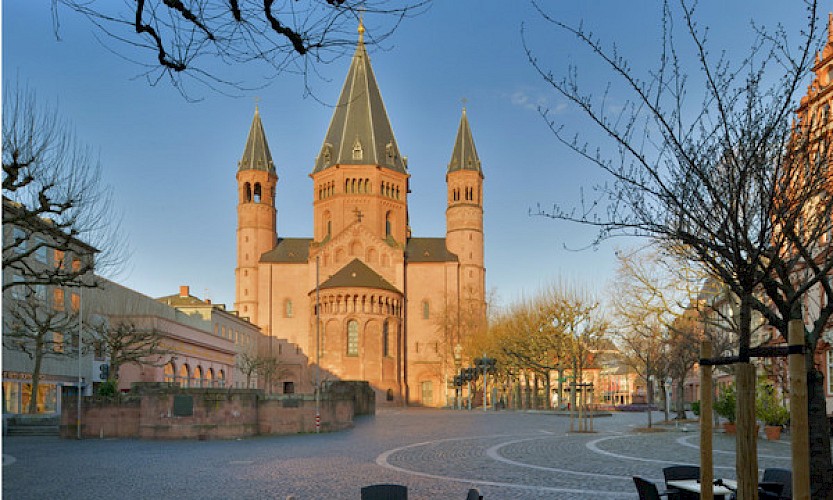
Domplatz und die Kunstwerke von Karoline Weis
GDKE, Landesmuseum Mainz
The artworks of Karoline Weis
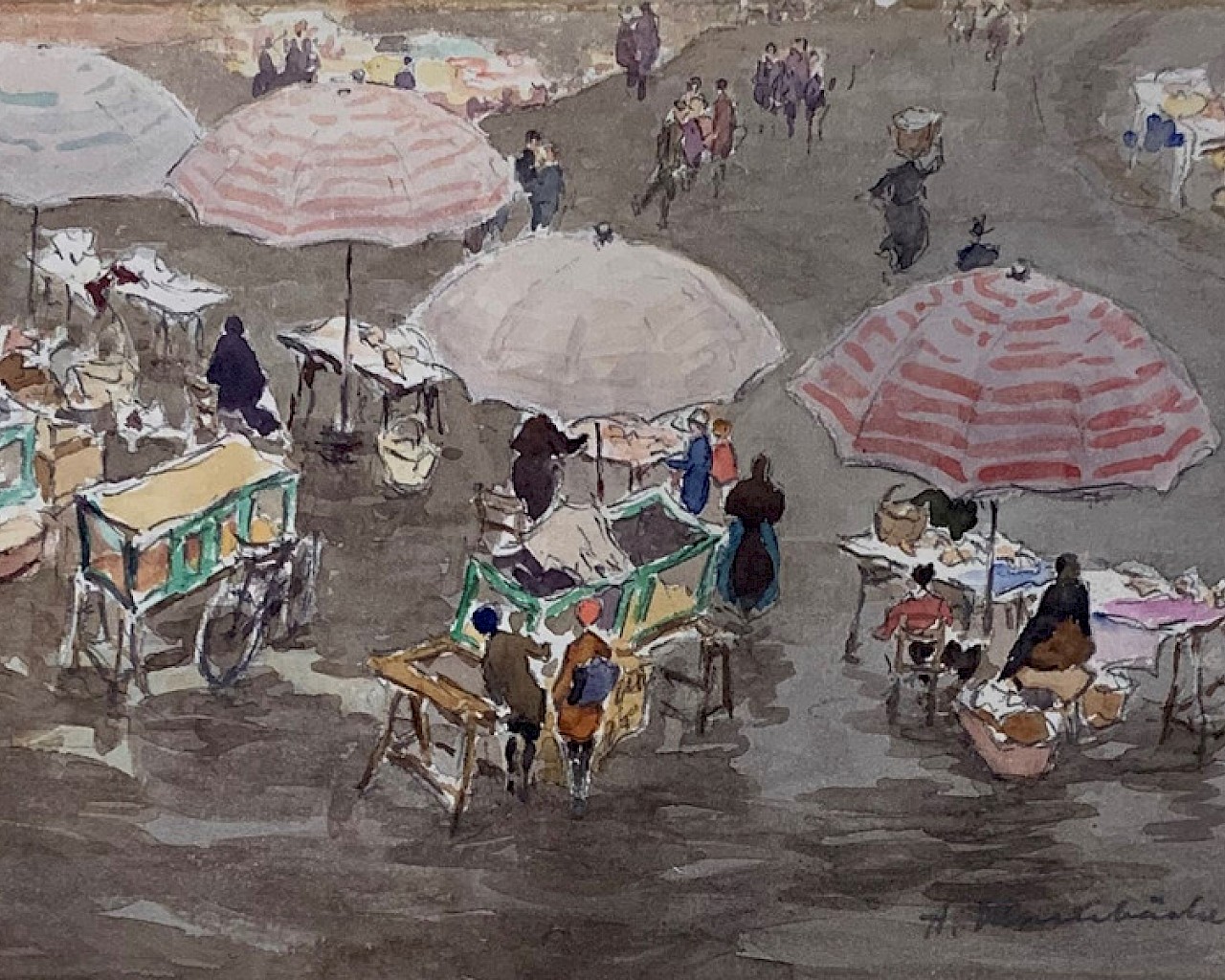
In 1933 and 1935, the Gemäldegalerie Mainz, the predecessor institution of the State Museum, acquired several works of art from Karoline Weis' collection. This collection consists of several watercolours and chalk drawings depicting regional scenes. Most of the items are by the Mainz artist Johann Manefeld. The most important work in the collection is a watercolour by Alfred Mumbächer which shows a market scene.
Alfred Mumbächer was one of the most famous Mainz painters of the twentieth century. He mainly chose cityscapes and landscapes from the region as his motifs. The painting that Karoline Weis sold to the State Museum is a watercolour. It shows a market scene here on Liebfrauenplatz. Mumbächer manages to capture a scene of Mainz that is lively and busy, but not hectic. It radiates peace and comfort and has an idyllic feel. The unclear, almost vibrating lines give the impression of observing the market from a distance, which in turn supports the interplay of liveliness and calm.
There are hardly any indications of provenance on the works of art from the former collection of Karoline Weis. The exception is three sheets by the artist Manefeld. There is a monogram on the back of the pictures: K.W. → Karoline Weis. Based on signatures by Karoline Weis, this monogram can clearly be traced back to her.
Her art collection suggests that she felt closely connected to the Mainz region. The pictures could be understood as idyllic places of longing. They therefore reflect the tastes of many collectors and the spirit of the times. Karoline Weis was an art lover like many others. One can only speculate as to why she sold these pictures. The Nazis may have forced Karoline Weis to sell the paintings. Or she had to hand in her collection to quickly get money. There is evidence that she needed money.
(© GDKE, Landesmuseum Mainz)
Dieses Audio ist leider nur auf Deutsch verfügbar.


mobilewebguide LMM Guide
wird geladen ...

Ein Angebot von satelles.de:
erfahren - erleben - entdecken
 Android
 IPhone