 LMM Guide
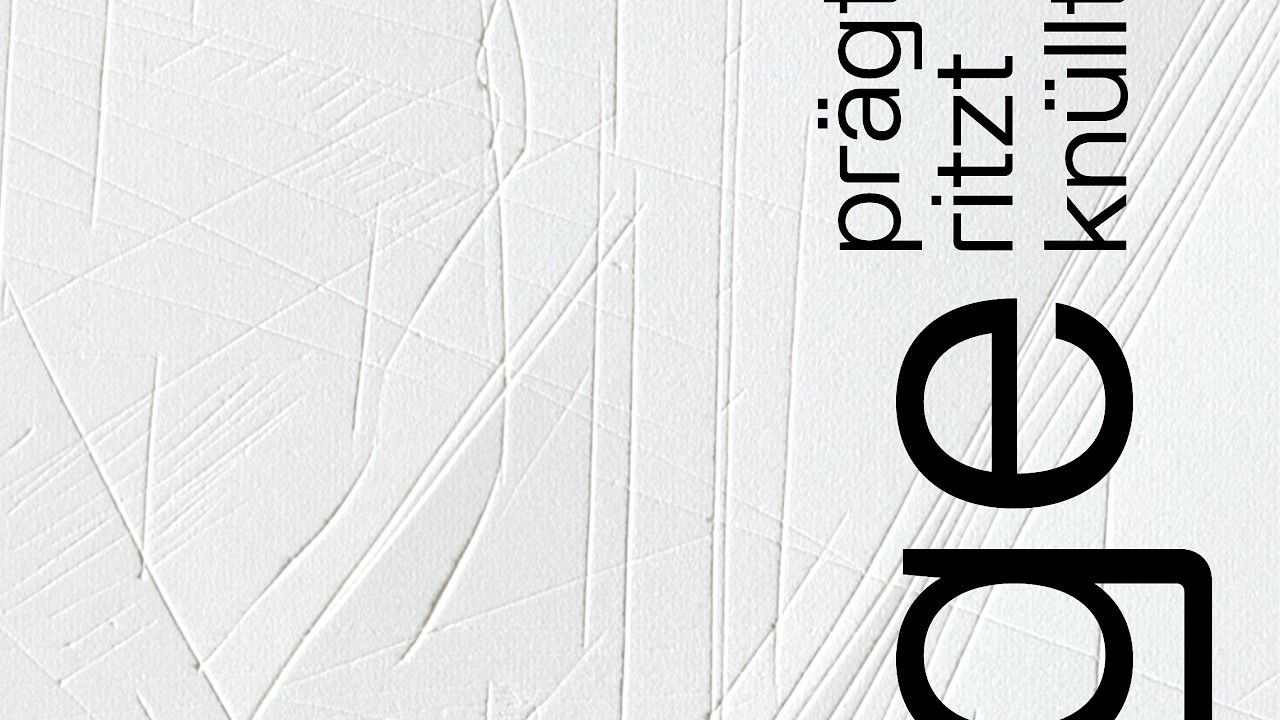
Seit den 1960er Jahren entdecken Kunstschaffende den seit der Industrialisierung im Alltag wenig beachteten Werkstoff Papier neu. Papier wird geformt, geschöpft, geprägt, gefaltet, geschnitten, gerissen und sogar zerstört. Einige Beispiele für diese Neuentdeckung des Materials finden sich in der Graphischen Sammlung im Landesmuseum Mainz. Die Kabinettausstellung lädt dazu ein, sich mit der Fragilität und Formbarkeit des Materials auseinanderzusetzen, ebenso mit der Frage nach dem Verhältnis von zweidimensionaler Fläche und dreidimensionalem Raum, die sich durch die Bearbeitung und die damit entstandenen Risse, Knicke, Falten und Vertiefungen in der Papieroberfläche stellt.
Zu sehen sind unter anderem Werke von Künstlerinnen und Künstlern wie dem Mainzer Gustl Stark (1917-2009) und Lore Bert (*1936), Arbeiten von Günther Uecker (1930-2025), Aen Sauerborn (1933-2020) und Erwin Wortelkamp (*1938), sowie dem spanisch-baskischen Bildhauer Eduardo Chillida (1924-2002). Als besonderes Highlight wird in der Ausstellung eine Neuerwerbung der in Mainz geborenen und international beachteten Künstlerin Angela Glajcar (*1970) erstmals der Öffentlichkeit präsentiert.
Die Kunstwerke aus Papier werden ergänzt durch Skulpturen aus dem Landesmuseum Mainz.
The 52-page portfolio Hommage á Johann Sebastian Bach is the culmination of Spanish-Basque sculptor Eduardo Chillida's exploration of composer Johann Sebastian Bach (1685–1750), which began in 1979. In it, Chillida translates the music of the composer he so highly esteems into the medium of graphic art. In addition to the twelve prints, which combine screen printing and embossing (with the exception of one blind embossing), the portfolio consists of repetitions of Bach's scores, as well as Chillida's own texts and those of other authors, such as Johann Wolfgang von Goethe (1749–1832) and Georges Braque (1882–1963).
For Eduardo Chillida Johann Sebastian Bach (1685-1750) was a master builder who worked not with the tools of an architect, but with time and sound, comparing Bach’s variations to the waves of the sea, which appear to be the same yet arenever identical. In his compositions, Chillida transforms the invisible space of music into a visual force field of black lines and colourless embossed areas. The lines, executed in Chillida's characteristic formal language, are interrupted by the embossed areas, nestle against them, and repeat themselves without ever being the same.

Chillida - Graphik Nr. 3 zur Messe in h-Moll

Chillida - Graphik Nr. 4 zur Matthäus-Passion

Chillida - Graphik Nr. 5 zu Magnificat

Chillida - Graphik Nr. 6 zu Sechs Brandenburgische Konzerte

Chillida - Graphik Nr. 9 zum Weihnachtsoratorium

Chillida - Graphik Nr. 10 zu Die Kunst der Fuge
wird geladen ...

 Android
 IPhone