 LMM Guide
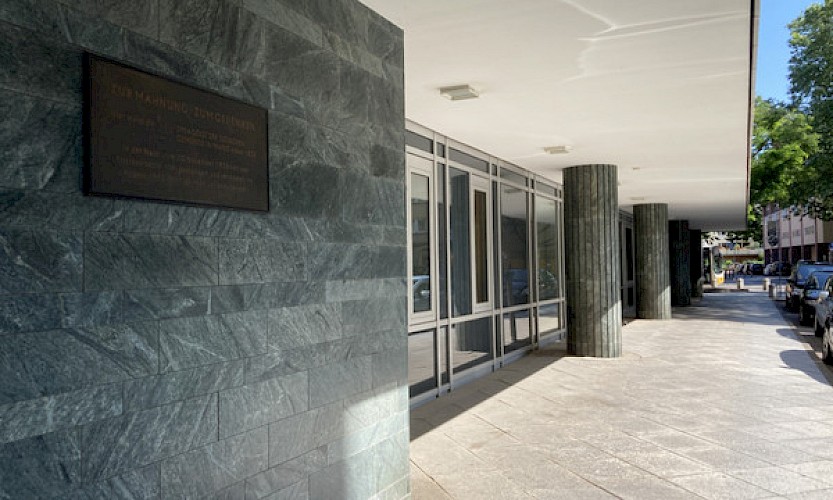
Die orthodoxe Synagoge in der Flachsmarktstraße / Margaretenstraße
GDKE, Landesmuseum Mainz
The Orthodox synagogue
The Orthodox synagogue was completed in 1877. The architect was Eduard Kreyßig, who also designed the Mainz New Town. Like the main synagogue, the synagogue designed by Kreyßig was built in the Moorish style. Contemporaries were impressed. The synagogue appeared to be "a real jewel box, both inside and out". The Jewish mourning hall in the new Jewish cemetery next to the synagogue built by architect Eduard Kreißig a few years later still gives an impression of this synagogue’s richness of form. The synagogue was more than just a place of worship for the Mainz community. A school was housed in a side wing. And Jewish immigrants from Eastern Europe had been praying since the 1920s in another room.
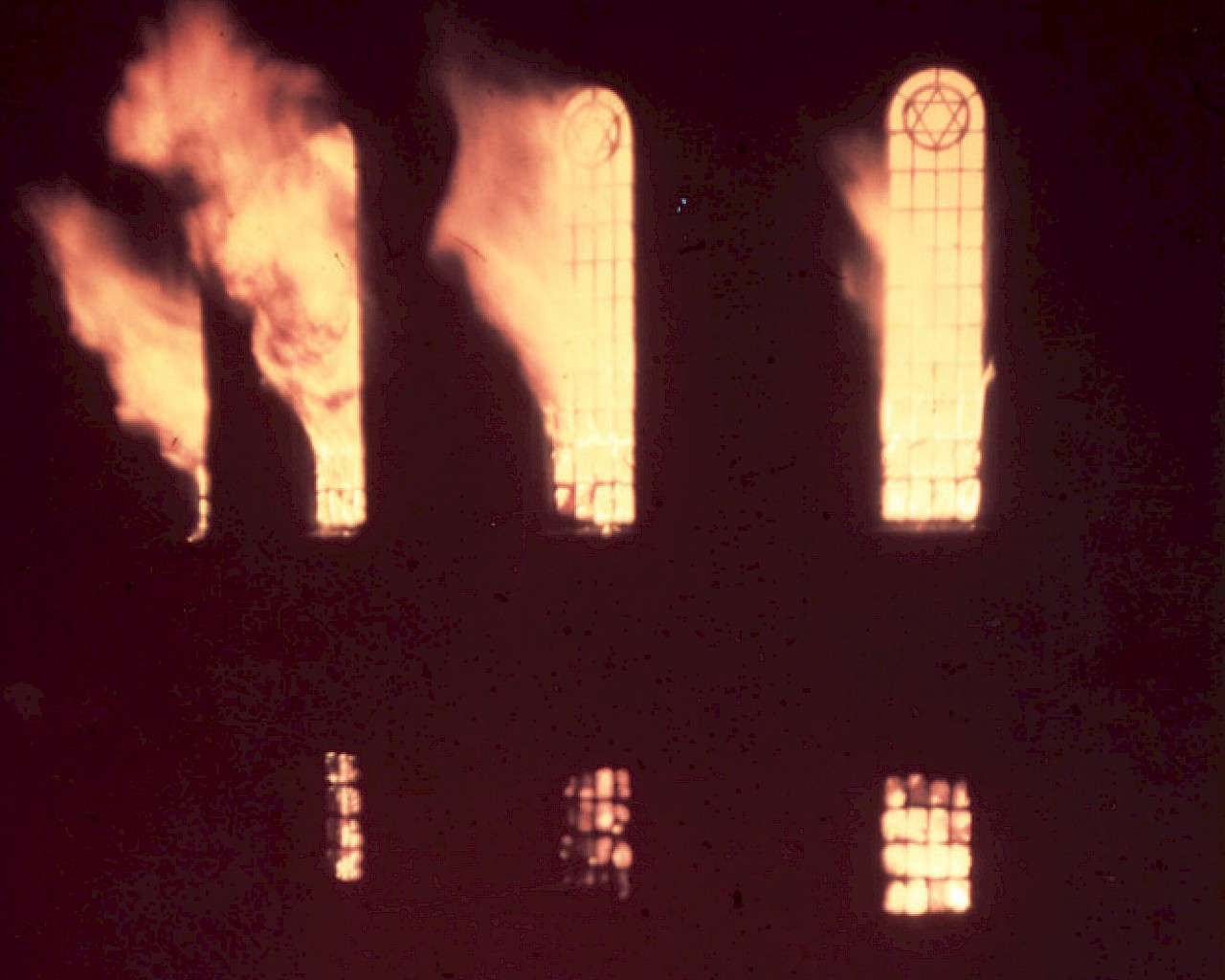
1938 saw the end of the synagogue with the November pogroms. On the night of 9/10 November, squads of SA and SS men appeared in front of all synagogues in Mainz. The men were carrying black gas cans. They set fire to the Orthodox synagogue and the adjoining school. Neither the police nor the fire department intervened.
Because the Orthodox synagogue stood in the middle of residential buildings, people were afraid that the fire would spread to the surrounding houses. The burning furniture was therefore extinguished before the whole building caught fire.
The destruction of the synagogues was only the prelude to further acts of violence. Throughout the city, SA men, SS men and Hitler Youth destroyed Jewish businesses and homes. They stole from the stores as well as from the apartments. The Jewish residents were threatened and mistreated. On the morning of November tenth, school classes were taken to the burnt-out synagogues. The teachers cynically referred to this as a "visual lesson in racial studies". Over a hundred Jewish men were arrested in Mainz, without justification, without charge. They were taken to Buchenwald concentration camp or Dachau concentration camp, where they remained for months.
We don't know how Karoline Weis experienced those days and nights in 1938. That is why we want to make another voice heard. Gerti Salomon was also a Jewish woman from Mainz and was twenty years old in 1938. After the Nazi dictatorship, she wrote down her memories (quote from Meyer-Jorgensen, Gerti: This is where my roots are, this is where I feel at home. The life of Gerti-Meyer-Jorgensen, née Salomon, Mainz 2010, p. 51):
"I was scared. I remember lying in my bed shivering when yet another horde of SA men roared through Hindenburgstraße: 'When the Jewish blood / splashes from the knife / that’s even better! These are memories that are so deeply rooted that you can't get rid of them.
Personal hostility also increased. A boy with whom I had gone to school for three years ... hissed at me in passing: 'Filthy Jewish pig, I hope you die soon!"
During the Nazi dictatorship, anti-Semitic abuse and insults became part of everyday life for Jewish citizens. Karoline Weis was also to experience this.
(© GDKE, Landesmuseum Mainz)
Dieses Audio ist leider nur auf Deutsch verfügbar.


mobilewebguide LMM Guide
wird geladen ...

Ein Angebot von satelles.de:
erfahren - erleben - entdecken
 Android
 IPhone