 LMM Guide
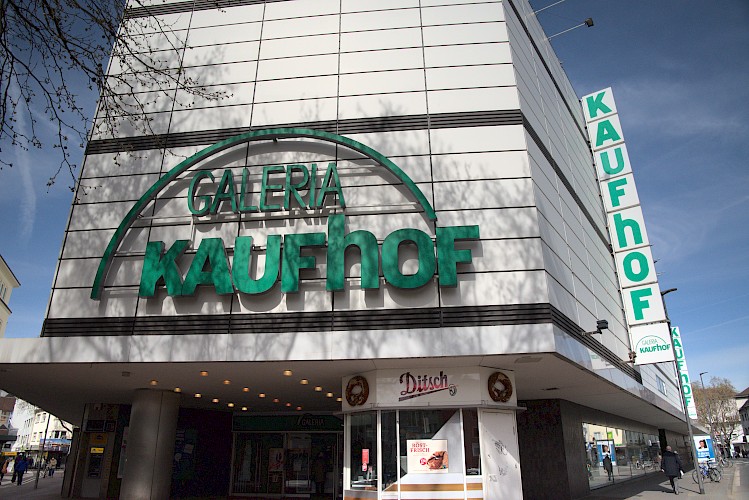
Kaufhaus Tietz, heute Galeria
GDKE, Landesmuseum Mainz
The Tietz department store
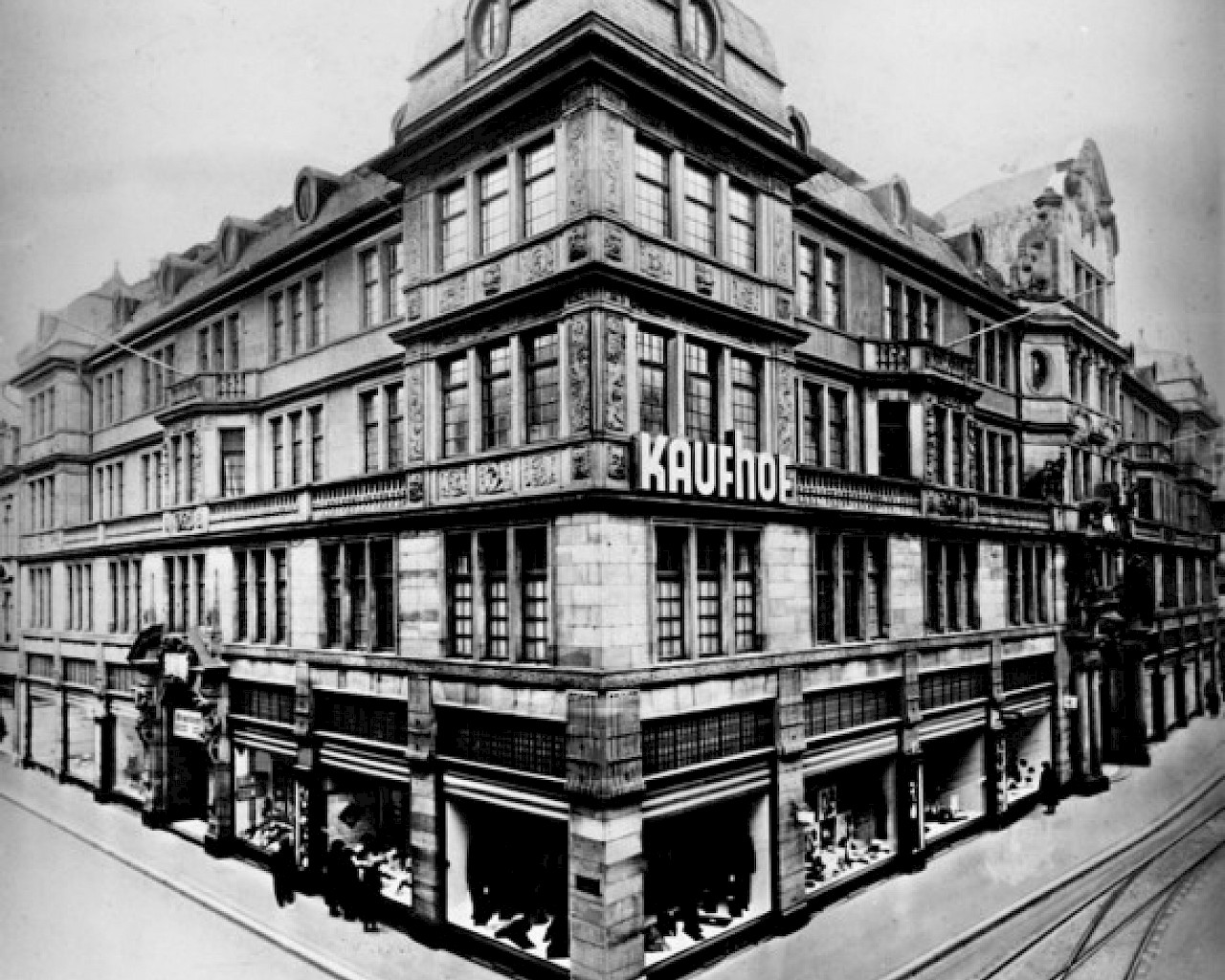
When Karoline Weis lived here, a department store also stood on this site: The Tietz department store. The Tietz department store had Jewish owners and thus came into the crosshairs of the National Socialists. Anti-Semitism was central to National Socialist convictions. According to the National Socialists, Jews were to disappear from German society. With the disappearance of the Jews, all social problems in Germany were then to disappear.
In 1933, the National Socialists achieved a major election victory. They immediately began to establish a dictatorship. This also marked the beginning of the oppression of the Jews.
In 1933, on the evening of 9 March, a Thursday, SA men appeared here and harassed customers to leave the store or prevented them from entering. This first boycott in Mainz only ended after six days. Two weeks later, on 1 April 1933, there was a second boycott, this time not only in Mainz but throughout Germany. Again SA men appeared, and again they harassed the customers. This time the boycott also affected doctors and lawyers. But this boycott officially ended after just one day. Those in power feared negative reactions from abroad that would affect German exports.
The National Socialists continued to exert pressure on Jewish tradesmen. Leonhard Tietz-AG was also unable to hold out. The company remained in the sights of the National Socialists. The Jewish board members were removed from the board and Alfred Leonhard Tietz had to hand over the management of the department store group. The department stores were given a new name. Ludwig Tietz" became "Westdeutscher Kaufhof", from 1953 simply called Kaufhof.
Jews were completely driven out of the economy by the end of the 1930s. At the time, these processes were called Aryanization or de-Jewification. The typical procedure: Jewish owners were forced to sell, and only a ridiculously low price was paid, if at all. The buyer was then a non-Jew, a so-called Aryan – often enough an influential National Socialist. There were around three hundred and thirty Jewish-owned companies in Mainz. Almost half of all working Jews in Mainz were self-employed. The Jewish businessmen lost their businesses, and after 1938 the last self-employed Jews had to give up.
Not only the self-employed were squeezed out of economic life. From 1933, Jewish civil servants and employees in the public sector were removed. They included the head of the Mainz health authority, Heinrich Rosenhaupt, and the curator of the Mainz Picture Gallery, Rudolf Busch, as well as teachers such as Johanna Sichel, who had taught Anna Seghers at the girls' secondary school. The decrees spread and there were increasingly more bans on professions. Jewish lawyers were no longer allowed to appear in court, and Jewish doctors were no longer allowed to treat their non-Jewish patients.
The occupational bans and Aryanization deprived many Jews of their livelihood. They had to live off their savings and began to sell their possessions. Many German Jews were only able to make a living with outside help. Karoline Weis was also no longer able to support herself after 1936. Her siblings supported her.
If you continue along Schusterstraße and through the pedestrian zone, you will reach the cathedral and the market square. If you turn left there, pass the market fountain and the Heunen column, you will find yourself on Liebfrauenplatz. You can experience market scenes here as they can be seen in the watercolour by Alfred Mumbächer, which once belonged to Karoline Weis.
(© GDKE, Landesmuseum Mainz)
Dieses Audio ist leider nur auf Deutsch verfügbar.


mobilewebguide LMM Guide
wird geladen ...

Ein Angebot von satelles.de:
erfahren - erleben - entdecken
 Android
 IPhone