 LMM Guide
Audio
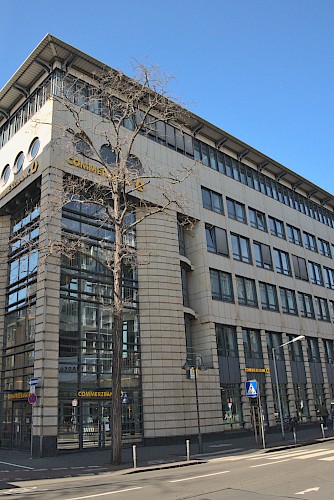
Haus Große Bleiche 39, früher das "Judenhaus"
GDKE, Landesmuseum Mainz
The "Jews' House"
Due to the destruction of the Second World War and the rapid reconstruction after the war, the Mainz of today appears different than it did during the Nazi era. Many traces have been obliterated, as is the case here at Große Bleiche 39. Before the bombing, there was another house behind the front building at no. 39, a rear building.
Karoline Weis lived in this house. She left behind no diary, no memoirs. The only things she left behind are the prints that are now kept in the National Museum. We don't even know what she looked like, because there is no photo of Karoline Weis. Souvenir photos are usually passed on within our families. After the Holocaust, after 1945, there was no longer a Weis family in Mainz. We do not know whether Ms Weis' family kept any memories of Karoline. Dorothee Glawe, a provenance researcher at the Mainz State Museum, has compiled what we know about Ms Weis from files. The dry language of the files and authorities makes it difficult to visualize a person's life. We'll try anyway!
Karoline Weis was born in Mainz in 1880. She had seven siblings – three sisters and four brothers. Her father Emanuel Weis was an antiques dealer in Mainz, and her mother Rosine Weis, née Löser, came from Laufersweiler, a rural community in the Hunsrück. When Karoline Weis moved into the rear building at number 39 in Grosse Bleiche, she was already in her early sixties and unmarried.
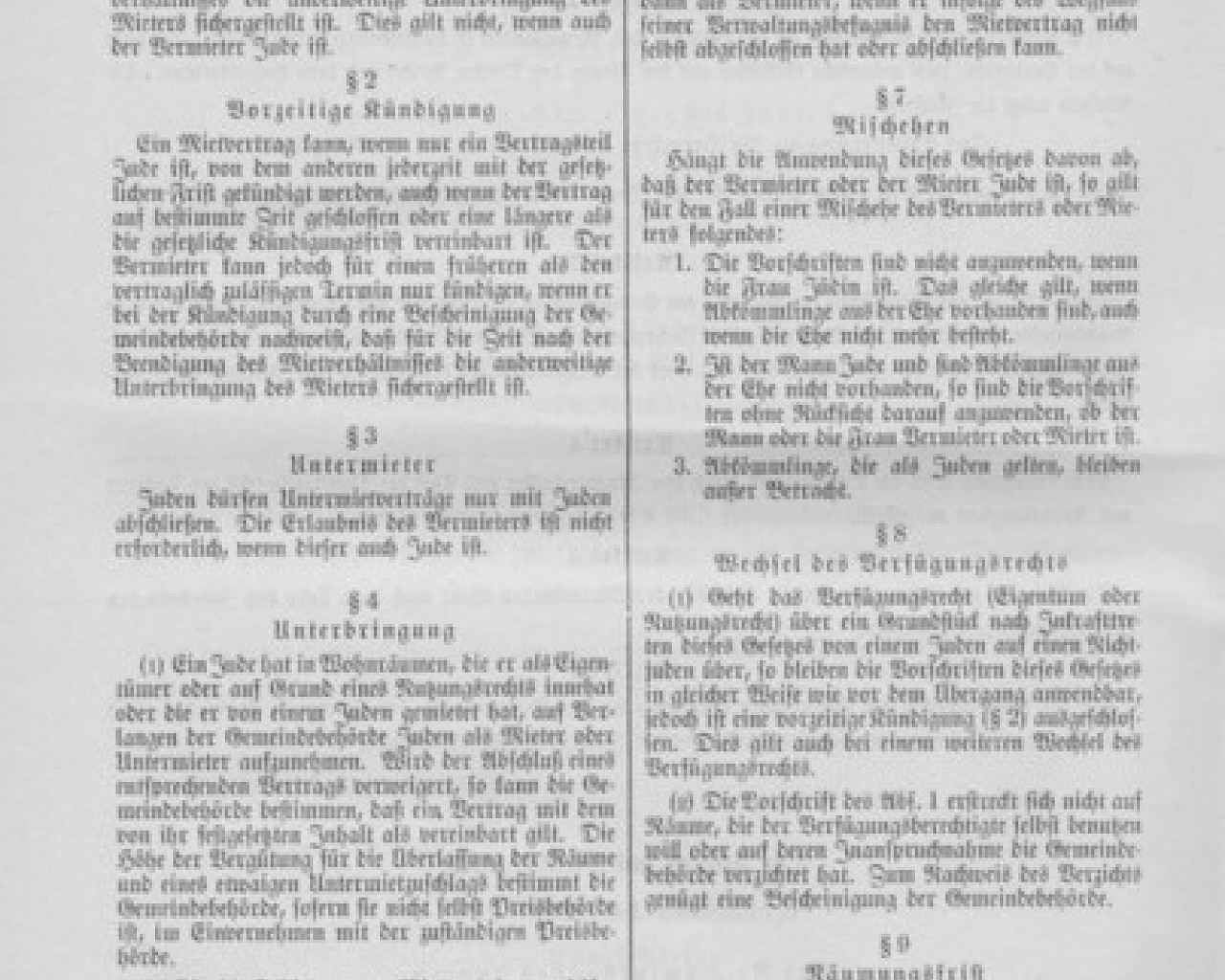
In the administrative language of National Socialist Germany, this rear building was a Jews' house. The National Socialist authorities had been setting up Jews' houses since 1939.
Karoline Weis was also forced to move and leave her apartment. The authorities assigned her the new apartment. She couldn't choose her neighbours. Sometimes even families were not accommodated in the same house. The Jew’s houses were soon overcrowded. When the Jewish population from the surrounding area was also relocated to Mainz, the situation increasingly worsened.
Karoline Weis was lucky. She didn't have to share the room with a stranger. She lived with her brother Ludwig. Ludwig Weis’ identification card can be found here:
https://zentralarchiv-juden.de/fileadmin/user_upload/bis2016dateien/B_5.1_Abt_IV_0258.pdf
From 1941, Karoline Weis had to wear a Jewish star when she left the house.
https://faust.mainz.de/objekt_start.fau?prj=internet&dm=archiv&zeig=62222
The front door of the rear building in Grosse Bleiche was also marked with a Star of David. The National Socialist authorities intended to completely isolate Jews from their surroundings and keep them under complete surveillance.
At the next stop, we will tell you about the history of Jews in Mainz. If you cross Große Bleiche and go into Klarastrasse, you will still find some old houses that give you an idea of what these streets looked like before the destruction. After the next crossroads, it is only a few steps to a memorial plaque on the left, the memorial plaque for the Jewish guard. Here, our walk briefly leaves the time of Karoline Weis and sheds light on the background.
(© GDKE, Landesmuseum Mainz)
Dieses Audio ist leider nur auf Deutsch verfügbar.


mobilewebguide LMM Guide
wird geladen ...

Ein Angebot von satelles.de:
erfahren - erleben - entdecken
 Android
 IPhone