 LMM Guide
Audio
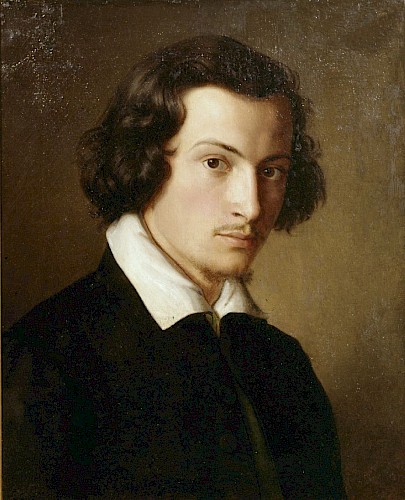
GDKE, Landesmuseum Mainz
Philipp Veit Self-portrait
The self-portrait by Philipp Veit from 1816 also has a special appeal and resembles a kind of passport photo in terms of the detail depicted. Philipp Veit was part of the German-speaking Nazarene artist movement, which focused on religious themes in Rome and Vienna during the 19th century. The self-portrait offers a deep insight into the artist's self-perception and shows how he saw himself: as a young, self-confident and aspiring painter of the 19th century. The viewer comes into contact with Veit, which reinforces the intimacy and authenticity.
Particularly noteworthy are the lively eyes, which look directly at the viewer and create a connection. The contrast between the dark background and the light collar further highlights the figure and allows the details of the face and clothing to stand out impressively. The choice of old German costume as a political statement also illustrates how important identity and origin were for artists. By also emphasizing his German origins in Rome as a member of the Lukasbund, the painter positions himself not only culturally but also politically.
Through his painting style, Veit shows his affinity with the painting of old master models such as Dürer and Raphael. Self-portraits have played an increasingly important role in painting since the 16th century and speak to a new self-confidence among artists that continues to this day. In the digital age, however, it is not self-painted portraits that are used for self-portrayal, but the increased use of selfies. These photos not only underline the expression of one's own identity, but also encourage interaction with others. It is amazing to see how social media has revolutionized this form of communication and self-expression.



mobilewebguide LMM Guide
wird geladen ...

Ein Angebot von satelles.de:
erfahren - erleben - entdecken
 Android
 IPhone