 LMM Guide
Audio
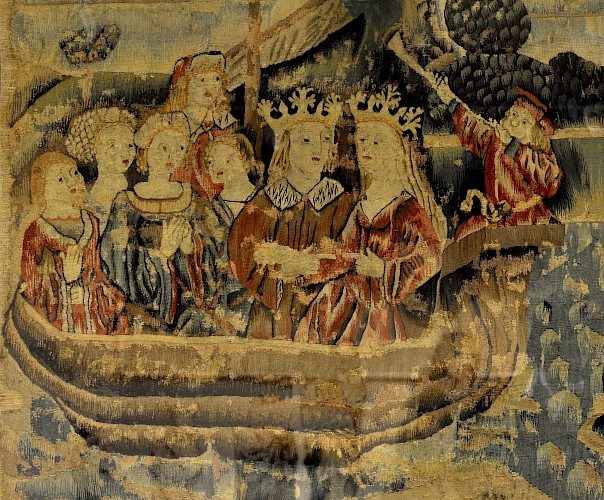
GDKE, Landesmuseum Mainz
Tapestry with scene from the Ursula legend
The complex production process made tapestries from the 14th and 15th centuries such as the “Ursula tapestry” very labour-intensive work. We rarely know the names of the individual artists, but rather only the urban centres responsible for their production. France in particular, but also Belgium and England and even Nuremberg are major locations for tapestry production, for example.
In the manufacturing process, a weaver first transferred the outlines of the motif to the warp threads (i.e. the threads into which something is woven) using a template. In the next step, the motifs were then woven in inverted from the reverse side with the weft threads. Wool or silk was used as a material. During the process, it was essential to continuously check the front so that the motif was also correct on that side.
Before it was newly exhibited, the tapestry was conserved by Wiesbaden textile restorer Brigitte Dreyspring. The costs incurred for these measures were borne by the Association of Friends of the Landesmuseum Mainz. Thanks to the restoration, we can view the textile today in the colours typical of its time.


mobilewebguide LMM Guide
wird geladen ...

Ein Angebot von satelles.de:
erfahren - erleben - entdecken
 Android
 IPhone