 LMM Guide
Audio
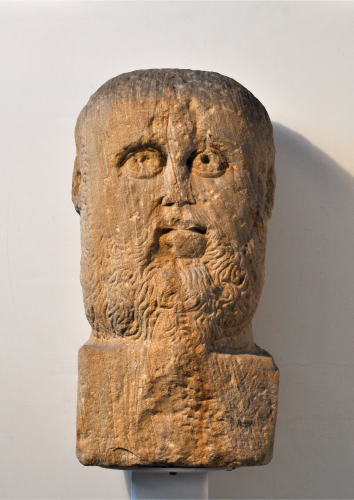
Colossal head of Emperor Julian?
GDKE, Landesmuseum Mainz
Colossal head of Emperor Julian?
Despite its apparently unfinished state, this colossal head was exhibited in antiquity. This is indicated by the remains of a dowel on the back of the neck. In connection with the history of Roman Mainz, the sitter could be the nephew of Constantine the Great, Julian Apostata. He liberated Mainz from the Germanic tribes in 357 and had the Rhine bridge repaired. He is often depicted on coins with an irregularly wavy beard, spirally curled sideburns and stringy hair. However, Julian only started wearing a beard after his proclamation as emperor. Before that, he was beardless in accordance with the court custom of the time, which is why we can date the head here to the time of his emperorship, i.e. between 360 and 363 AD.



mobilewebguide LMM Guide
wird geladen ...

Ein Angebot von satelles.de:
erfahren - erleben - entdecken
 Android
 IPhone