 LMM Guide
2000-Today Jewish Life in the present Day – new Visibility
In Bad Kreuznach, a new synagogue is inaugurated in a building that previously served as a chapel for the United States Armed Forces. A Jewish community had already been re-established in Bad Kreuznach in as early as 1945, but it only had 15 members left by 1980. The influx of Jews from the states resulting from the dissolution of the Soviet Union (Commonwealth of Independent States (CIS)) in the 1990s had led to a significant increase in the size of the community, which has 207 members, 95% of whom come from the former CIS states, in 2007.
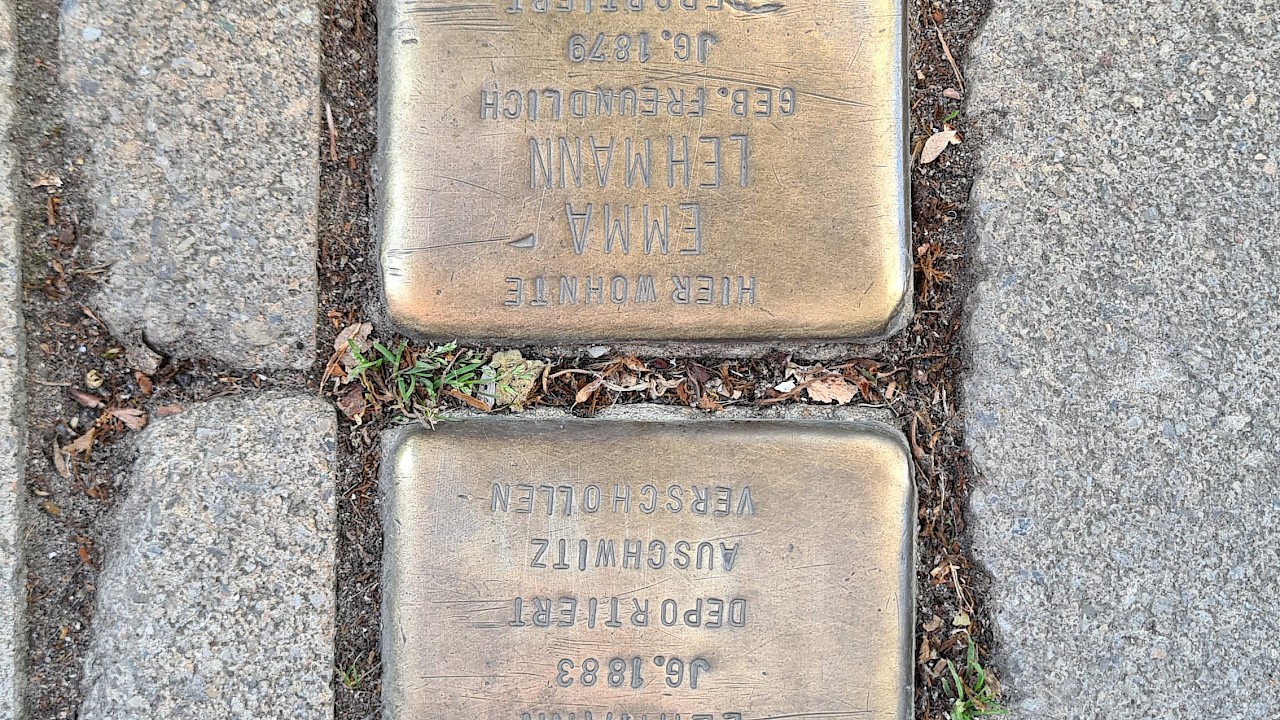
The first Stolperstein memorial blocks are laid in memory of Karl and Emma Lehmann at the address Hetzelstraße 15 in the town of Neustadt an der Weinstraße.
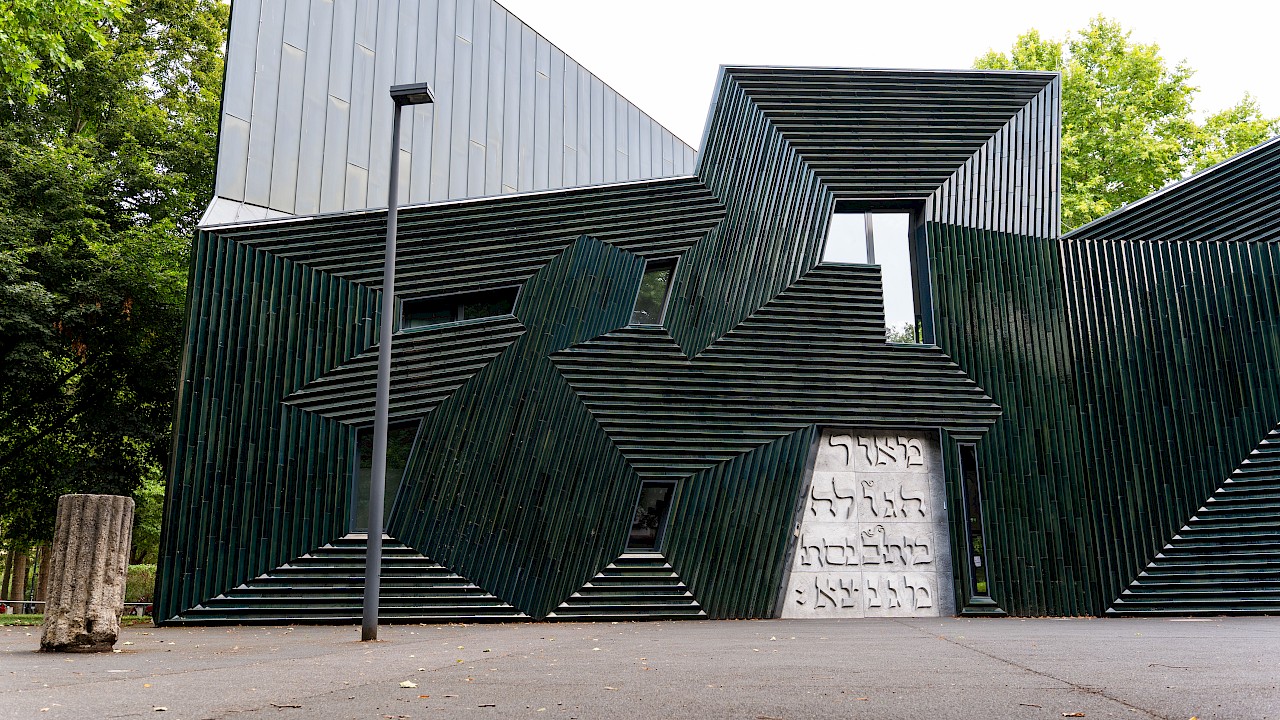
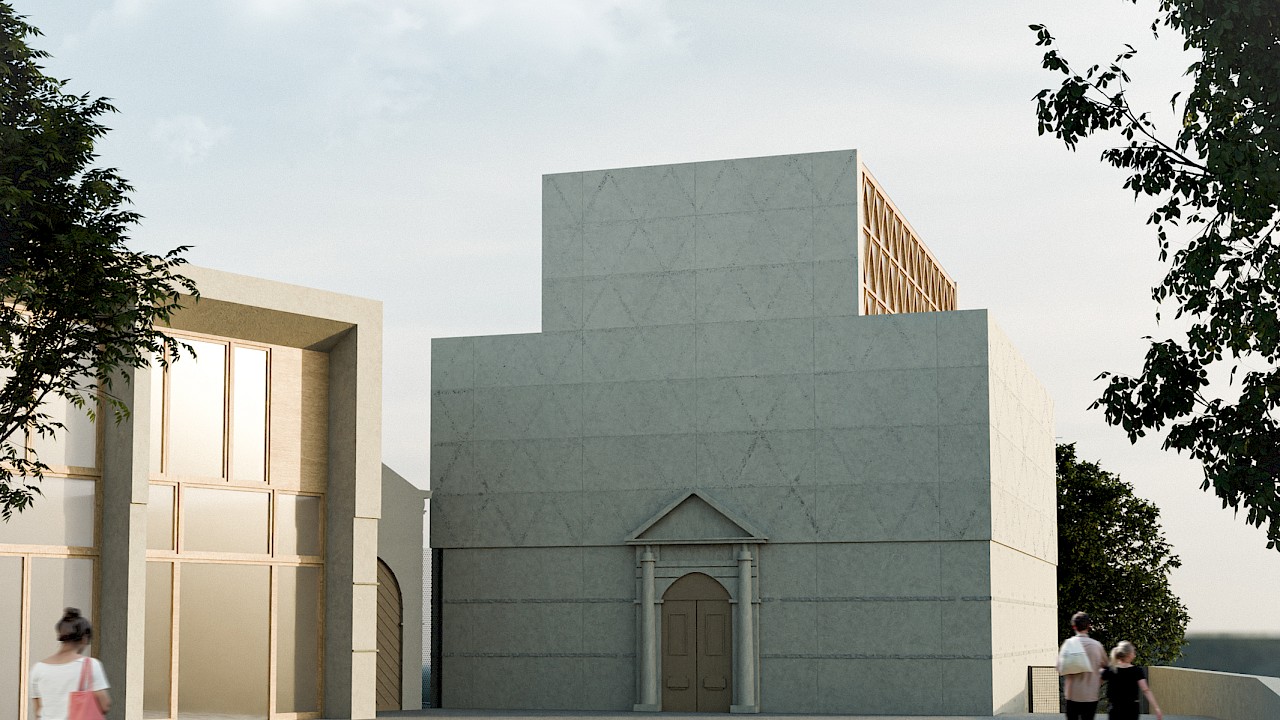
Based on the plans drawn up by Manuel Herz, the new community centre with an impressive synagogue is erected on the site of the old synagogue. Its shape depicts the five Hebrew letters of the word Kedushah (sanctification). With its independent aesthetic language, the synagogue architecture consciously ventures away from typical building designs.
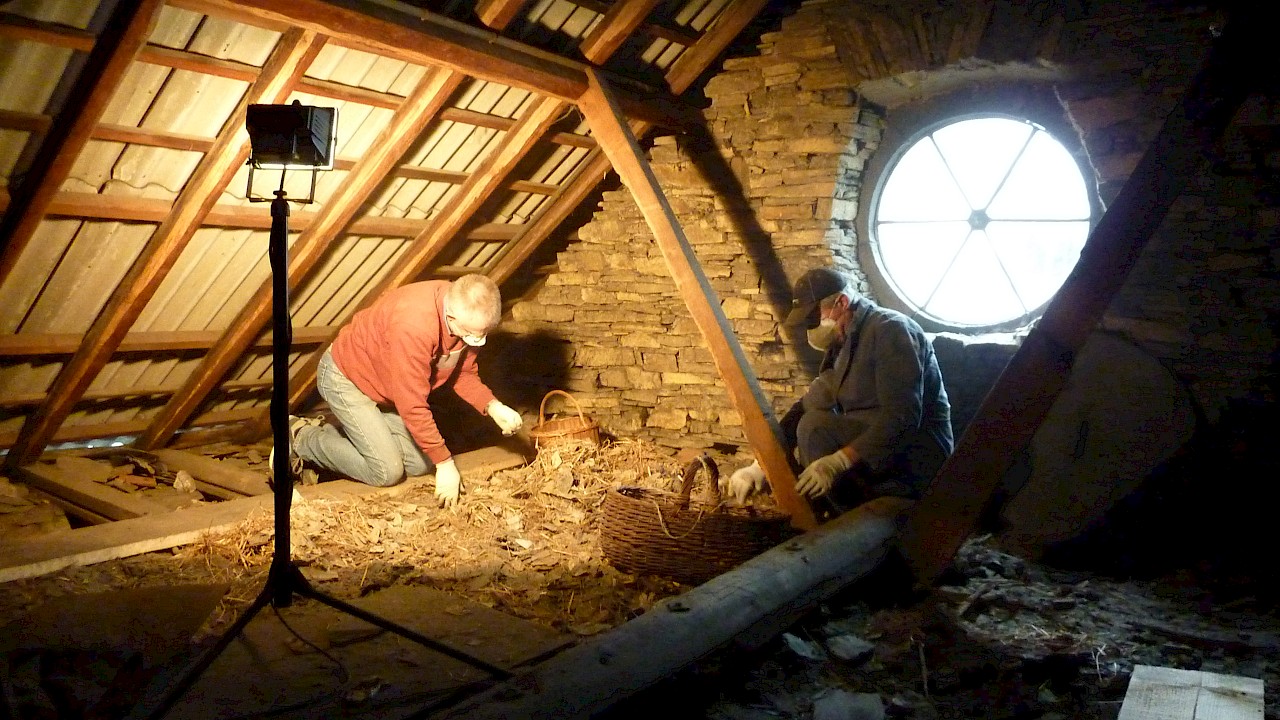
Many associations are founded to regain visibility for Jewish heritage. The Kultur- und Heimatverein Niederzissen e.V., the village’s culture and local history association, provides both financial and non-material support for the preservation of the former synagogue as a place of remembrance and encounter, as well as the refurbishment and museum presentation of the finds.
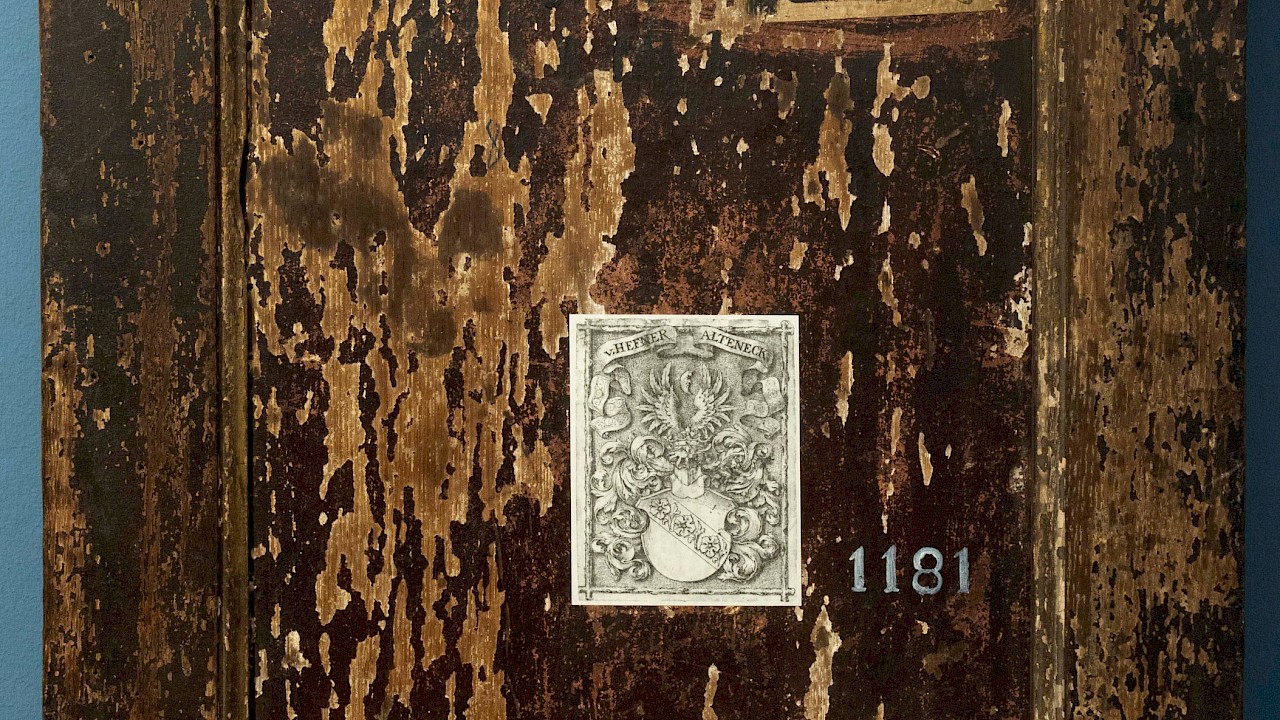
Systematic research into the collections (provenance research) at Mainz State Museum begins in April 2016. The research aims to identify works of art and cultural assets that Jewish owners were unjustly forced to hand over under the National Socialist regime and that were subsequently confiscated or sold under value. The [SC1] research projects are funded by the German Lost Art Foundation (DZK) in Magdeburg.
In addition to the exhibitions and the publication of the results, the research has also already led to several returns (restitutions) of cultural assets to the successors of their former owners. Given the museum’s self-commitment to this cause, further research will also be required in the future.
As a clear statement against anti-Semitism, Rhineland-Palatinate is the first federal state of Germany to appoint an officer for Jewish life and anti-Semitic issues.
The State Association of Jewish Communities appoints the first State Rabbi of Rhineland-Palatinate. In addition to the many day-to-day tasks of a rabbi, the State Rabbi is primarily responsible for cooperation with state institutions and other religious communities.
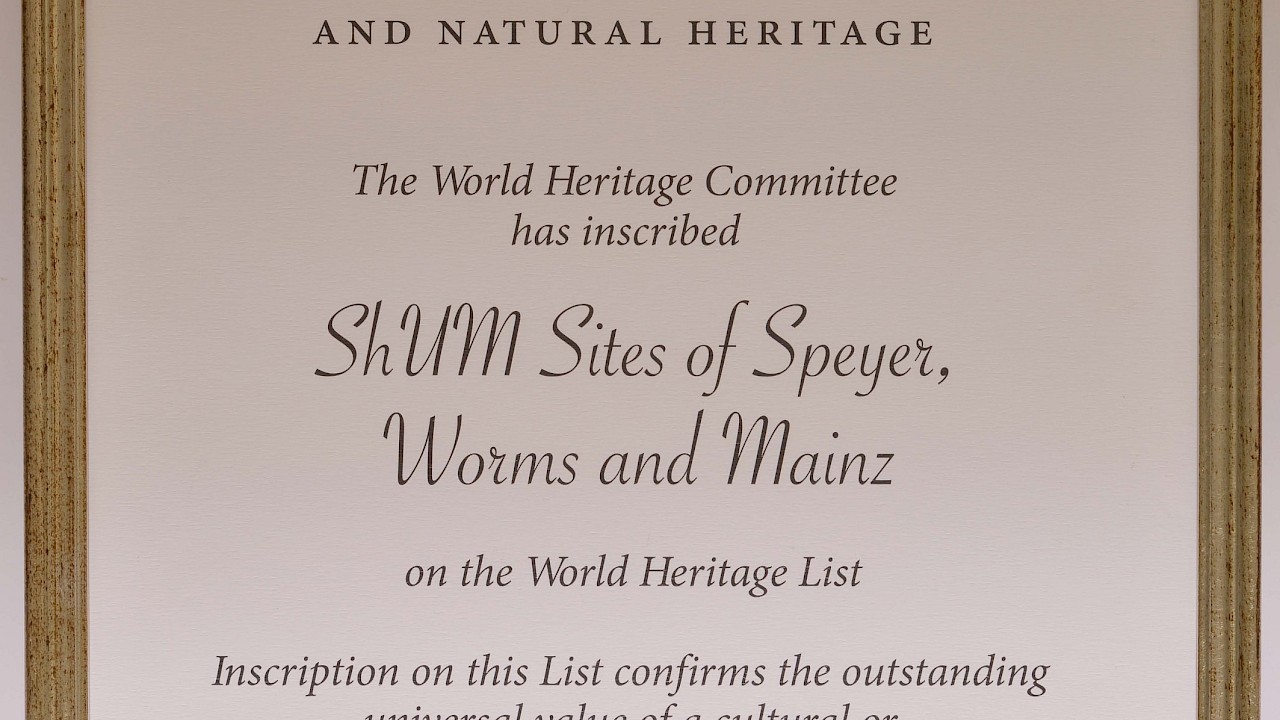
On 27 July, the World Heritage Committee approves the ShUM Sites of Speyer, Worms and Mainz as a UNESCO World Heritage Site. They are the first World Heritage Site connected to Jewish life in Germany.
In the present day, unique buildings and cemeteries provide an insight into the significant and eventful history of the three communities, which are some of the oldest testimonies to Jewish life in Germany.
After the war, only around five to seven Jewish survivors return to Koblenz. Here, they lay the foundation for new Jewish life and set up a prayer hall in the former mourning hall of the Jewish cemetery with the support of the city of Koblenz. The construction of a synagogue in or in close proximity to a cemetery is actually not permitted according to Jewish rites. Against this background, the construction of a synagogue with a community centre for the growing Jewish community commences in a new location in 2023.
In October 1926, Rabbi Sali Levi opens the memorial cemetery on the site of the medieval Jewish cemetery in Mainz. Its importance will soon be explained in a visitors’ centre run by the City of Mainz, which is planned to open in summer 2026.
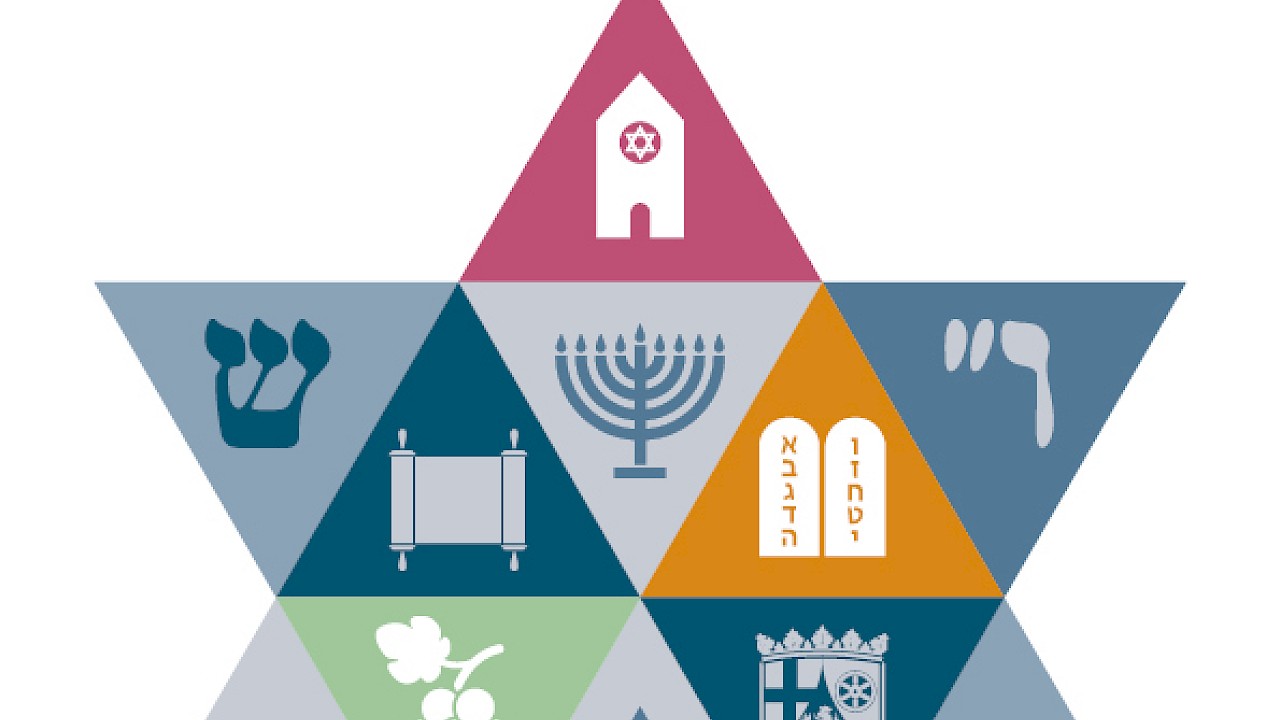
The ShUM Sites have been a UNESCO World Heritage site for five years. This title is not only a distinction but also a duty to protect and preserve the site. The anniversary is celebrated with a wide variety of different events.
wird geladen ...

 Android
 IPhone