 LMM Guide
1850 Jewish communities flourish in rural locations
At this time, the Jewish communities in the larger cities are dominated by liberal forces committed to the ideas of the Jewish Enlightenment (Haskala), which aims to achieve a harmonious balance between traditional Judaism and the modern culture of the time. This leads to resistance among families with more traditional beliefs. Based on the example set by Frankfurt (1828), Orthodox members of the community form “Israelite Religious Societies” in Mainz in 1856 and in Trier in 1879. In Worms, the benefactor Leopold Levy has a synagogue built for the Orthodox Jews in 1875, but avoids splitting the community.
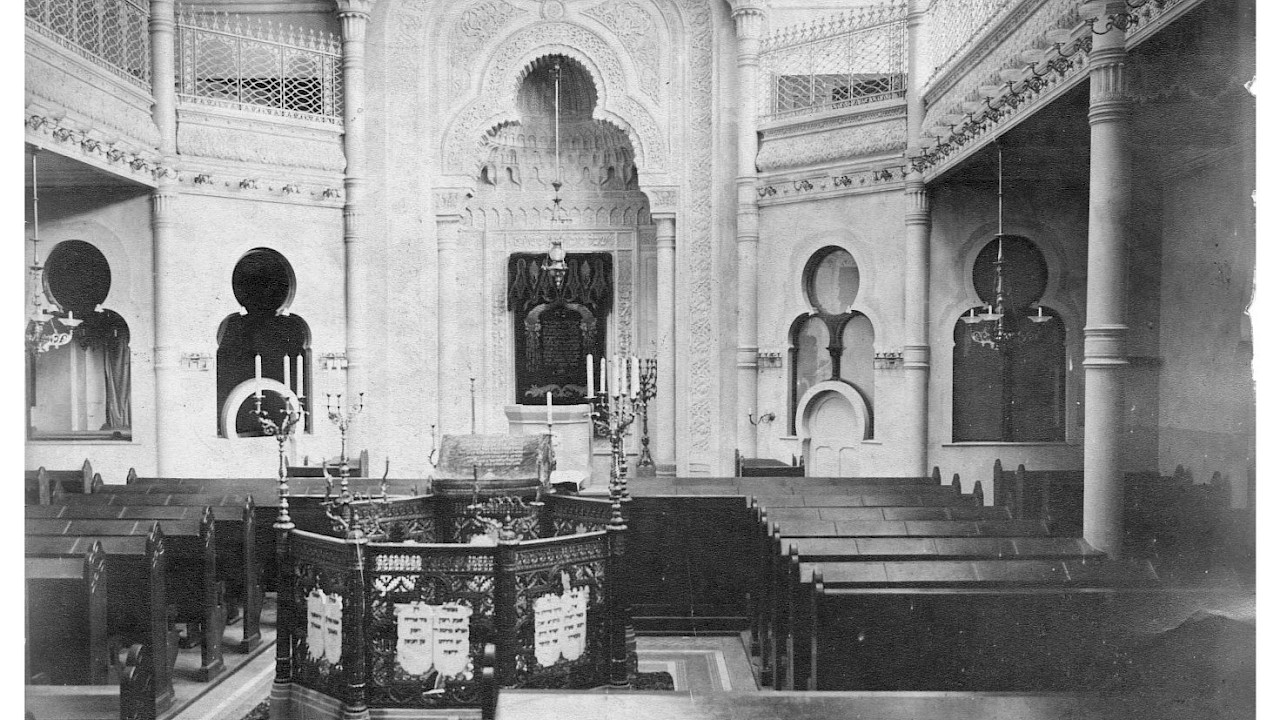
A multitude of synagogues emerge in rural locations in the 19th century, for example in the small Jewish community in Saffig in 1858. Prior to the synagogue, the community probably used a private prayer room.

When the German Empire is founded, Jews are officially made equal in legal terms. This represents the first formal equality for Jews. A wave of patriotism spreads throughout the Jewish population.
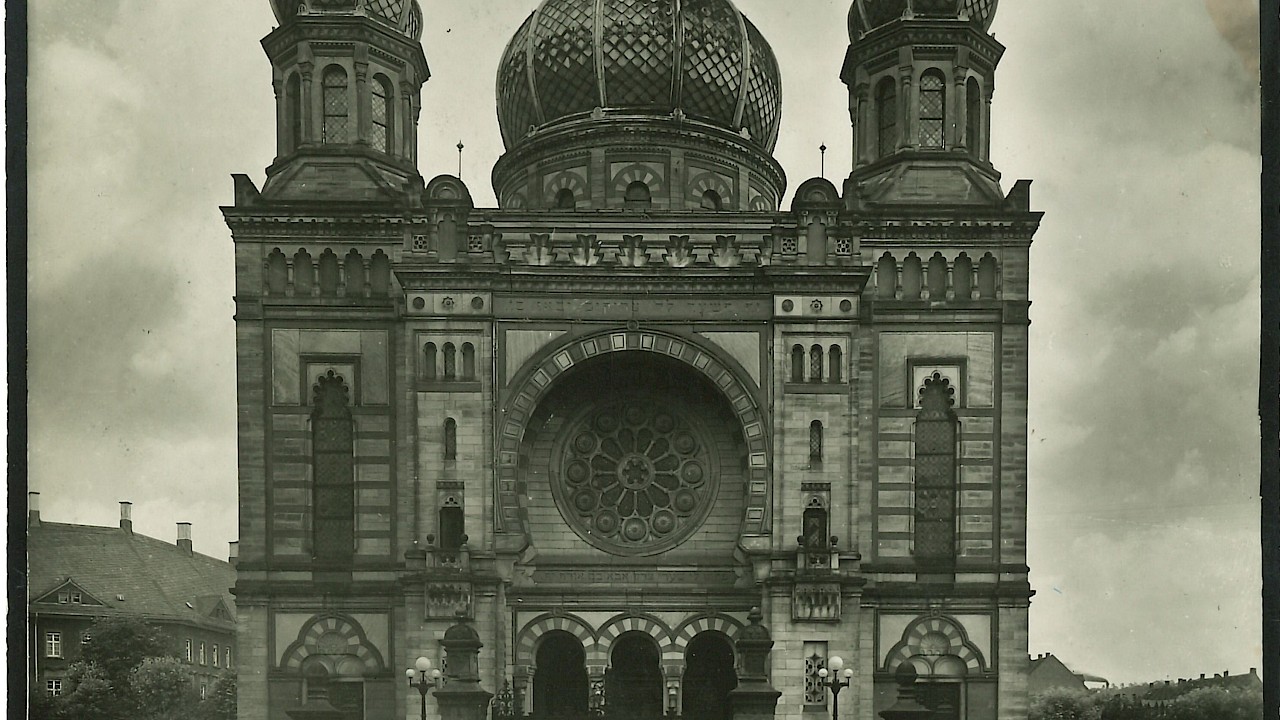
New and large synagogues are constructed in the cities. They often have very elaborate designs that reflect the advancement of the Jewish communities over the course of the 19th century. These buildings are a signal that the Jews have arrived and wish to stay. Some synagogues, for example that of Kaiserslautern, are constructed in Moorish-Byzantine style.
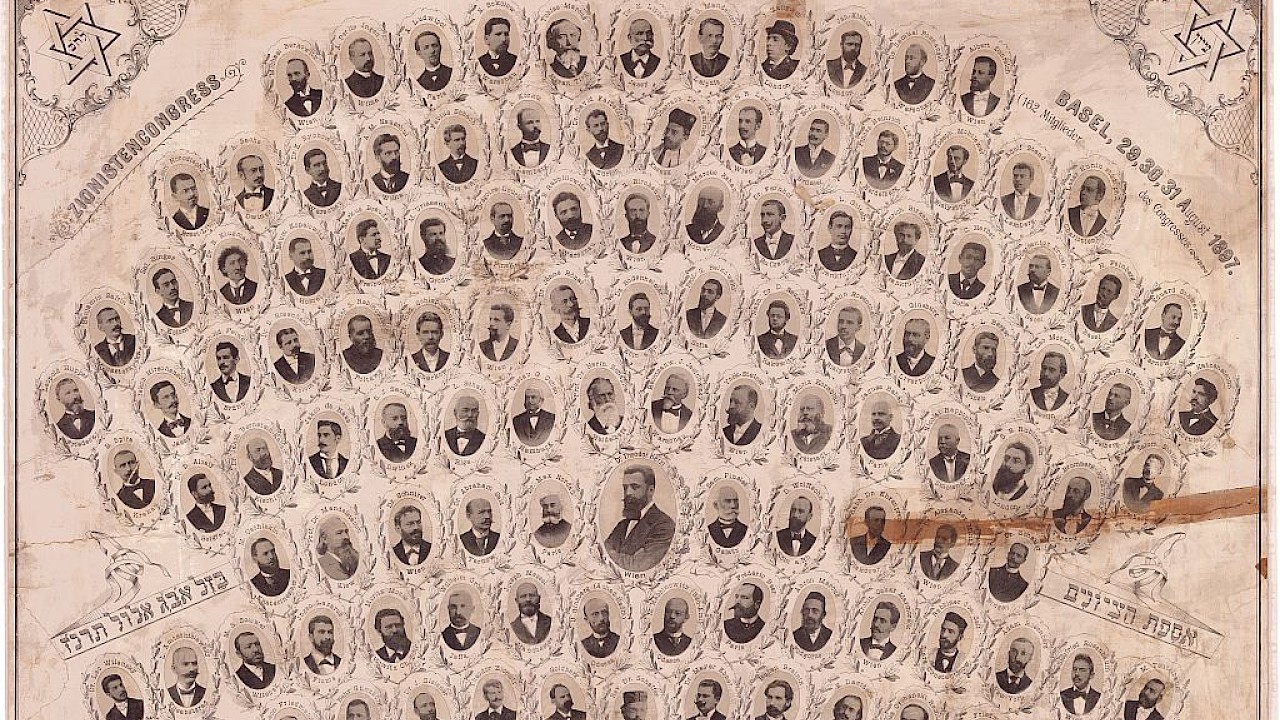
The Zionist Federation aims to strengthen the Zionist movement in Germany.The general meeting of delegates serves the purpose of preparing for the First Zionist Congress in Basel, where establishing a home for the Jewish people in Palestine under public law would be set as the primary objective. In Basel, the name “National Jewish Federation of Germany” is adopted, initiated by the lawyer Dr Rudolf Schauer from the German town of Bingen.
wird geladen ...

 Android
 IPhone