 LMM Guide
Language
Audio
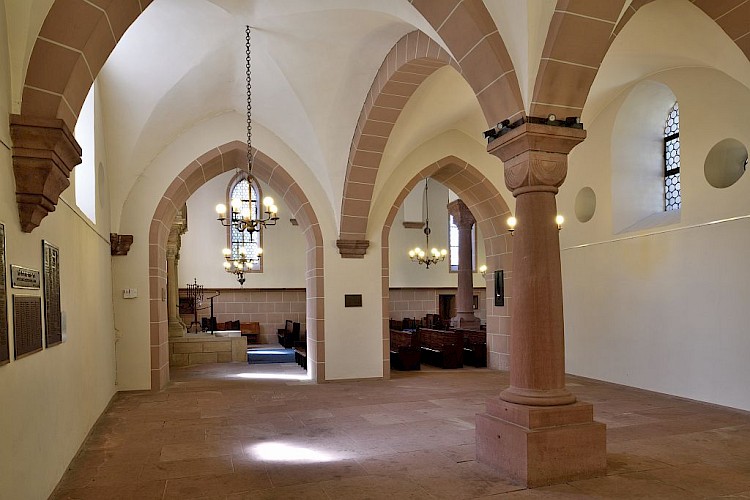
Worms, liberale Synagoge, Blick von der Frauenschul in den Hauptraum © GDKE, Welterbesekretariat (Jürgen Ernst)
GDKE, Landesmuseum Mainz
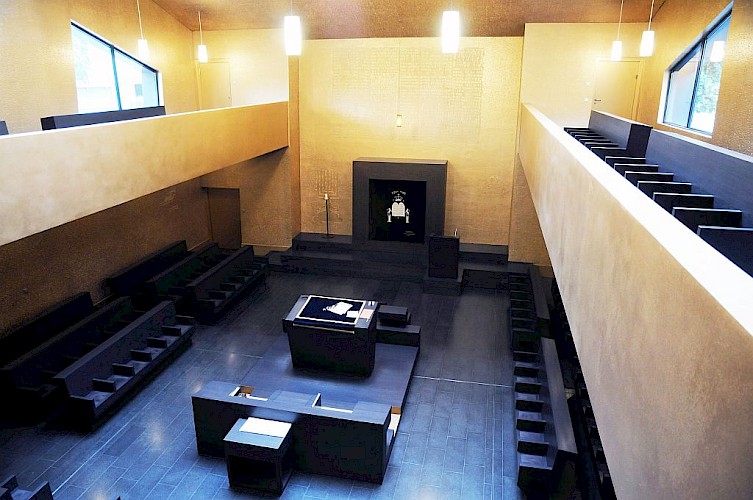
Mainz, new orthodox synagogue, view from the women’s gallery into the interior © GDKE, Direktion Landesmuseum Mainz (Stephan Dinges)
GDKE, Landesmuseum Mainz
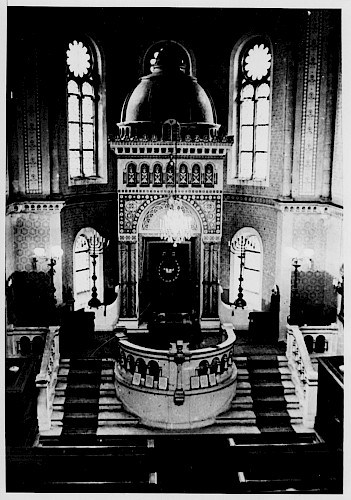
Landau, synagogue © Stadtarchiv Landau, Bildarchiv, NL Merz
GDKE, Landesmuseum Mainz
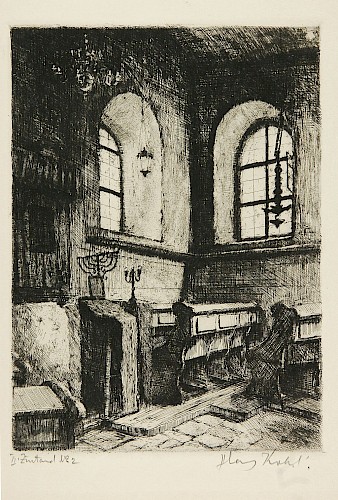
Weisenau, synagogue interior (1928) © GDKE, Direktion Landesmuseum Mainz (Astrid Garth)
GDKE, Landesmuseum Mainz
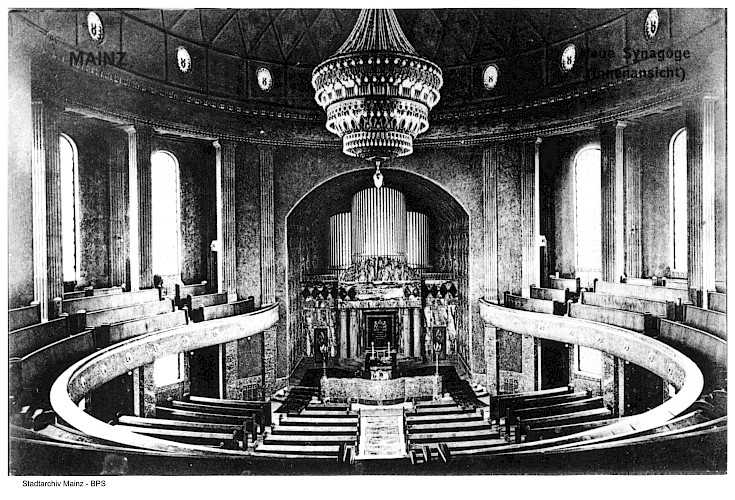
Mainz, liberal synagogue, until 1938 © Stadtarchiv Mainz, BPSF 1142a
GDKE, Landesmuseum Mainz
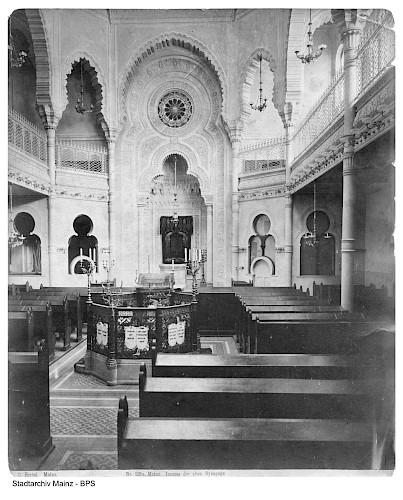
Mainz, orthodox synagogue, until 1938 © Stadtarchiv Mainz, BPSF 71c
GDKE, Landesmuseum Mainz
Women in the synagogue
In the Middle Ages, women often pray in their own room, the women’s shul, which becomes tangible for the first time in the ShUM communities. It is connected to the synagogue, with listening windows acting as an opening between the two buildings, but it does not have a Torah Ark or a bema. In the 18th century, women’s galleries start to appear in synagogues. The reform movement in the 19th century then initiates the gradual abolishment of the strict separation of men and women, which has now completely disappeared from liberal communities but can still partly be found in modern-day orthodox congregations.
synagogue
Synagogue Sacred Jewish building for gatherings, services and social and cultural events within the Jewish community.
Torah
liberal
Liberal A Jewish confession (religious persuasion, a sub-group within a religion) that originated in Germany in the 19th century and represents a modernisation of traditional religious practice and principles. Opposite: orthodox (strongly religious, devout) - a stream of Judaism that strictly observes all regulations and commandments of the Jewish religious laws.
orthodox
Orthodox Strongly religious, devout. A stream of Judaism that strictly observes all regulations and commandments of the Jewish religious laws. Opposite: liberal - A Jewish confession (a religious persuasion) that originated in Germany in the 19th century and represents a modernisation of traditional religious practice and principles.

Back
Layer up
Home
Share

mobilewebguide LMM Guide
wird geladen ...

Ein Angebot von satelles.de:
erfahren - erleben - entdecken
 Android
 IPhone