 LMM Guide
Audio
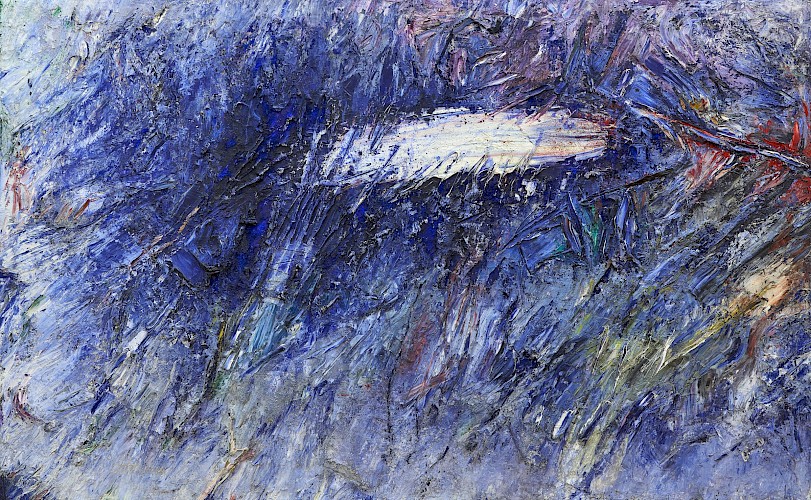
Gerhard Hoehme, Commitment to the romantic-expressive, 1957/58, oil/cotton canvas, Inv.-Nr. 88/2
GDKE, Landesmuseum Mainz
Paint as a material
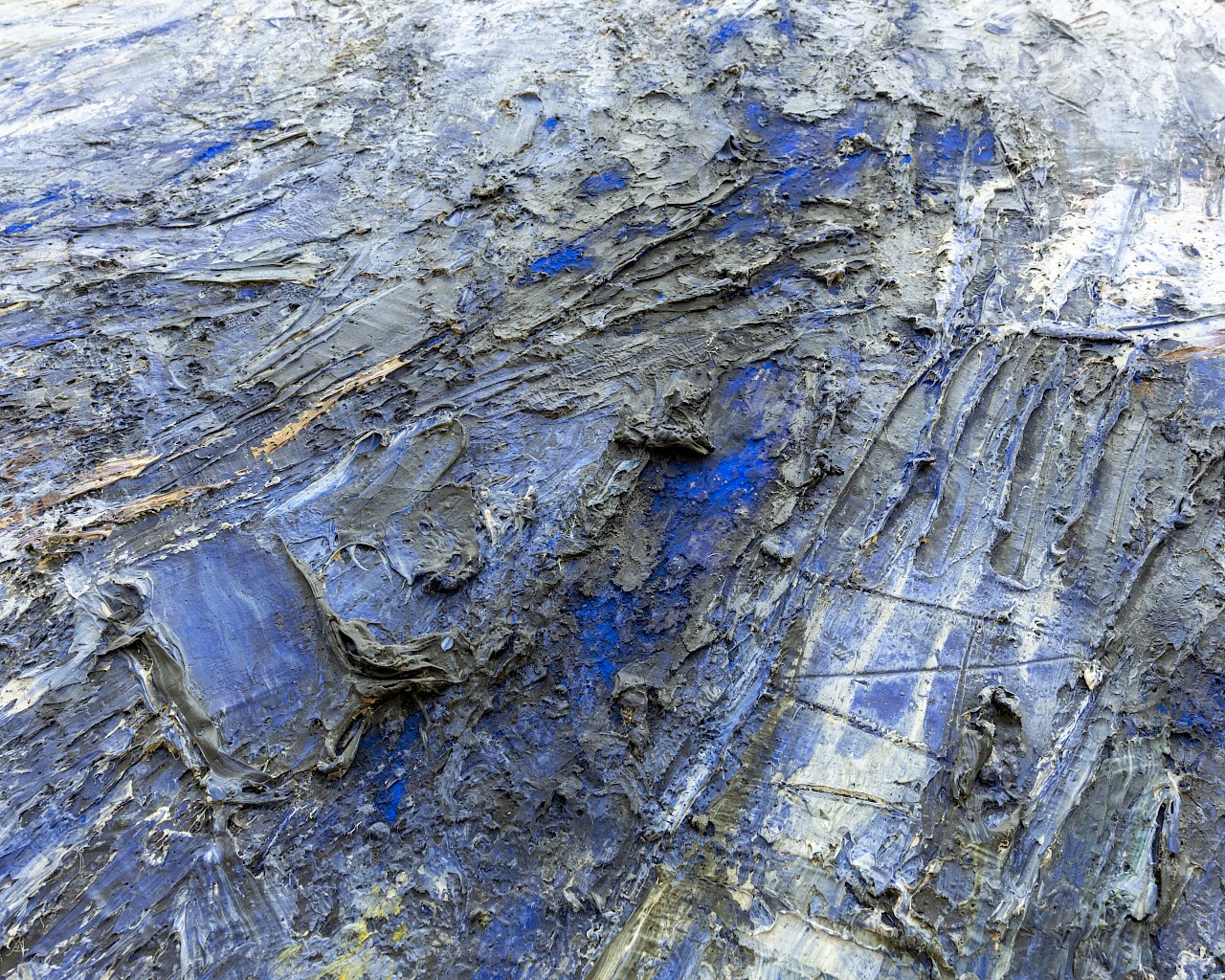
For Hoehme, paint was not just a simple layer, but a mass that he gave shape, direction, and movement with his pallet knife, squeegees, and fingers. For him, it thus extended its purely visual effect by becoming a moulded, plastic material. It increasingly moved away from the background and from the centre of the picture and thus seemed to be approaching the viewer. This use of paint in the picture, which was novel at the time, also required a new painting process: Hoehme laid the canvas on the floor. He worked the paint with a spatula, among other tools, and piled it up or squashed it down (Fig. 1).
He scratched the still-damp mass using a brush or his own fingers (Fig. 1) or pressed gauze into it (Fig. 2) to give it an enhanced haptic appeal. His goal was to increase the viewer's impression of colour and sensory perception and to use the paint in three dimensions, detached from the canvas.



mobilewebguide LMM Guide
wird geladen ...

Ein Angebot von satelles.de:
erfahren - erleben - entdecken
 Android
 IPhone