 LMM Guide
Audio
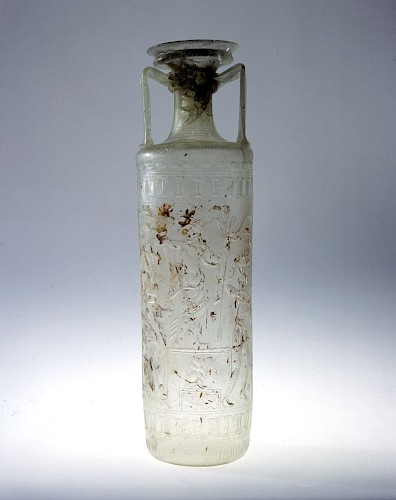
GDKE, Landesmuseum Mainz
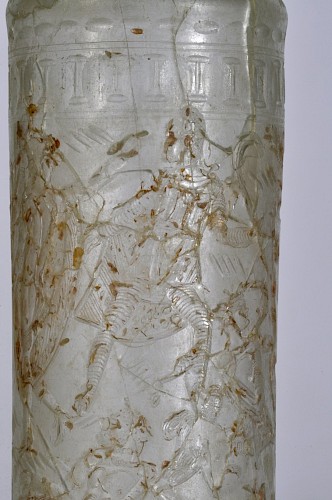
GDKE, Landesmuseum Mainz
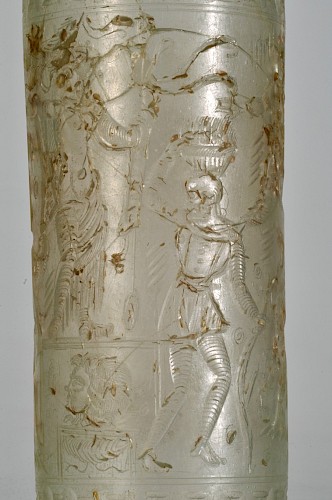
GDKE, Landesmuseum Mainz
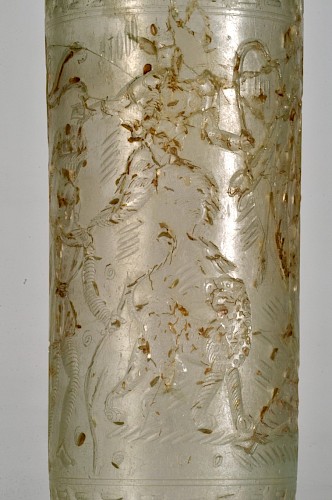
GDKE, Landesmuseum Mainz
An outstanding glass
The Landesmuseum Mainz has an important collection of Roman glass. Only the most valuable piece - the so-called Dionysus bottle from Hohen-Sülzen, Alzey-Worms district - is currently on display in the Schau! depot. The glass was found in a sandstone sarcophagus in 1869, together with three other glasses that are now lost, including the famous bowl with net overlay (diatrete). It is not only its unusual size (h. 42 (!) cm) that makes the light green double-handled glass significant; it is also one of the rare cylinder bottles with figurative cut decoration. The god of wine Dionysus is depicted standing on a pedestal, flanked by figures of his entourage (Pan, satyr, maenad) and his companion animal, the panther. The deep hollow carving and the additional fine internal engraving give the figures a very three-dimensional appearance. It is still debated among researchers whether the glass was produced in the 3rd century in a workshop in Cologne or in an Eastern Mediterranean workshop.
Hanging lamp or ceremonial glass? - The diatrette bowl from Hohen-Sülzen
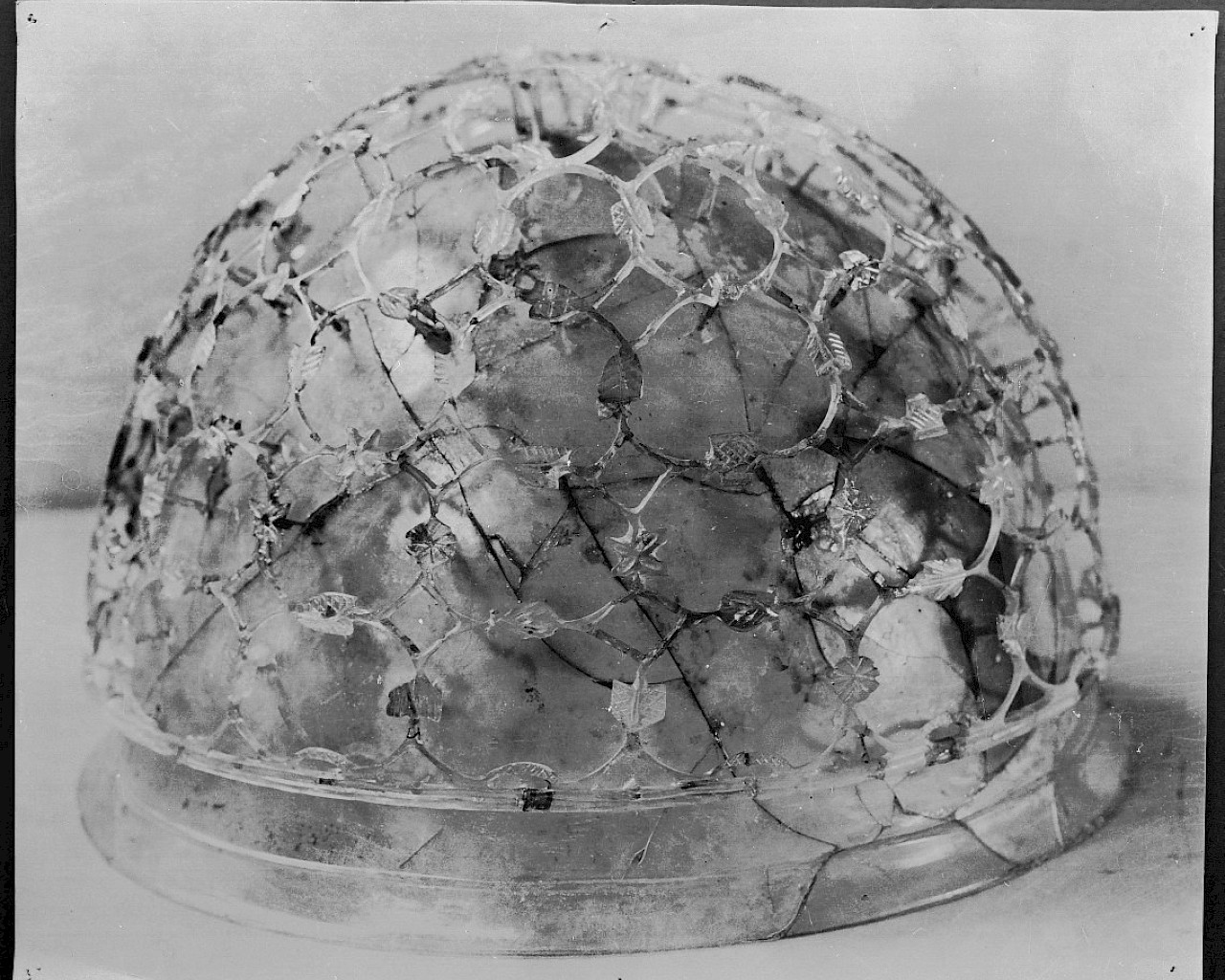
Diatreme glasses are among the most precious glasses from Roman times, which were even used in the imperial court. To date, only around 50 examples are known from the entire Roman Empire. The diatret bowl (from the Latin diatretus = openwork), made of colorless glass, consists of a hemispherical inner bowl connected by glass bars to an apparently floating glass net of round meshes. Glass flowers and leaves sit on the attachment points of the bars. Diatret glasses are painstakingly cut from a thick-walled glass blank. With a rim diameter of approx. 21 cm and a height of approx. 15 cm, the Hohen-Sülzen bowl is the largest net diatret known to date. It was probably used with a metal holder either as a hanging lamp or simply as a decorative piece. Unfortunately, the Landesmuseum Mainz only has photos of the glass from the pre-war period, as the bowl has been lost since 1945.

Additional information: Hanging lamp or ceremonial glass? - The diatrette bowl from Hohen-Sülzen (GDKE, Landesmuseum Mainz)


mobilewebguide LMM Guide
wird geladen ...

Ein Angebot von satelles.de:
erfahren - erleben - entdecken
 Android
 IPhone