 LMM Guide
Audio
GDKE, Landesmuseum Mainz
Resistance to the last breath
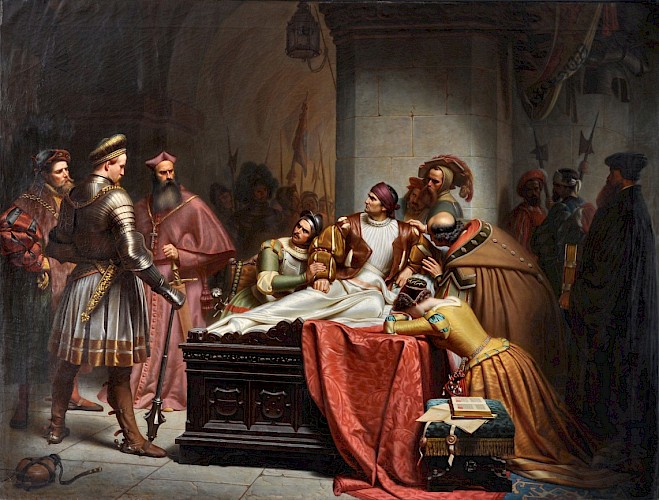
The Swiss history painter Johann Caspar Bosshardt depicts the last moments of the knight Franz von Sickingen in a very theatrical way. But is this what a dying man looks like?
Sickingen, dressed in a white robe, is lying on his bed with his upper body upright. The place depicted is his castle Nanstein near Landstuhl.
After Sickingen tried in vain to besiege the Electorate and Archbishopric of Trier, a coalition of princes launched a counterattack: Sickingen's castle is bombarded with an incredible 600 cannonballs for the time. He capitulates after just two days. The knight died on May 7, 1523 from injuries sustained when a collapsing wall buried him. He is also said to have been severely injured in the head.
The painter effectively stages the wounded Sickingen - only the purple headband seems to indicate his injuries - as a heroic figure of resistance, who, even in death, defies the will of the princes who have approached his bed on the left with a determined look.
The events and circumstances of death in 1523 were recorded in great detail in the report of the imperial herald Caspar Sturm. Sturm took part in the campaign against Franz von Sickingen and his comrades. The report is an important source for us today.
Albrecht Dürer met and drew Caspar Sturm on his journey to the Netherlands.

Additional information: The death of Franz von Sickingen (GDKE, LMMZ)


mobilewebguide LMM Guide
wird geladen ...

Ein Angebot von satelles.de:
erfahren - erleben - entdecken
 Android
 IPhone