 LMM Guide
Audio
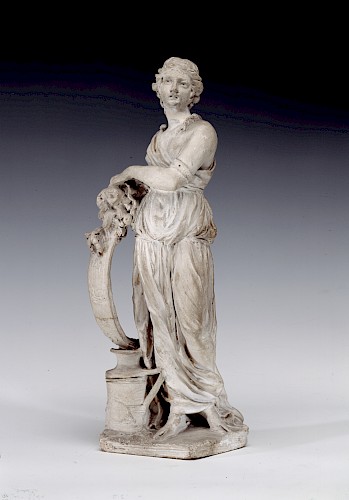
Johann Sebastian Barnabas Pfaff - Allegory of the art of horticulture
GDKE, Landesmuseum Mainz
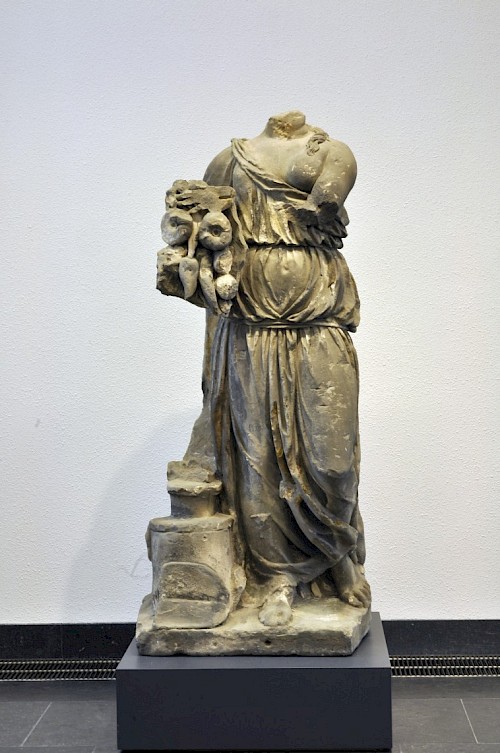
Fragment of the sandstone figure ‘Allegory of Horticulture’
GDKE, Landesmuseum Mainz
Small sketches in clay
A particular highlight is the unique collection of models by the Mainz sculptor Johann Sebastian Barnabas Pfaff. The fact that these 64 bozzetti (not all of which are on display) have survived to this day and have not been destroyed after use, as is usually the case, is an absolutely fortunate coincidence.
These small clay figures serve as preliminary models for a sculptor preparing a large-scale sculpture, which is then carved out of stone or wood or cast in metal.
The term bozzetto (plural bozzetti), derived from the Italian, means a work sketch made of easily moldable material, such as clay, plaster or wax. Some bozzetti even have carved or painted squares on them, which are used by the workshop workers to transfer this model to the scale of a large sculpture.
The 'Allegory of the Art of Horticulture' once stood high up on the magnificent façade of the Provost's Office of Mainz Cathedral as a finished sandstone sculpture.
The sandstone figure of the "Allegory of Horticulture" has even been preserved. It stands in the forum of the Landesmuseum Mainz on the ground floor.
The building of the cathedral provostry was located in the area of today's theater in the city center of Mainz and was destroyed in 1793. As a result, the "Allegory of Horticulture" is unfortunately only preserved as a fragment and without a head.



mobilewebguide LMM Guide
wird geladen ...

Ein Angebot von satelles.de:
erfahren - erleben - entdecken
 Android
 IPhone