 LMM Guide
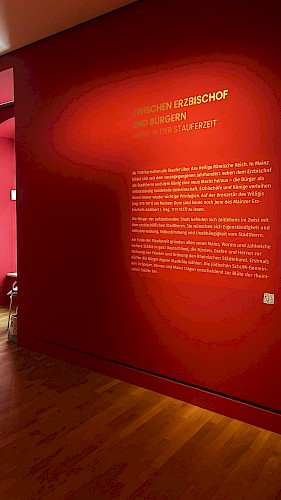
Between the archbishop and the citizens. Mainz in the Hohenstaufen period
GDKE, Landesmuseum Mainz
Between the archbishop and the citizens. Mainz in the Hohenstaufen period
From 1138, the Hohenstaufen dynasty ruled over the Holy Roman Empire. Since the previous century, a new power had been emerging in Mainz alongside the archbishop as the city ruler and the king – the citizens as a community that acts independently. Archbishops and kings repeatedly granted them important privileges. On the bronze door of Willigis (r. 975-1011) at Mainz Cathedral, you can still read the privileges from the Archbishop of Mainz, Adalbert I (r. 1111-1137). The citizens of the up-and-coming city were at odds with the archepiscopal city ruler throughout their lives. They want autonomy and self-government, co-determination and independence from the city ruler.
At the end of the Hohenstaufen period, Mainz, Worms and numerous other cities throughout Germany, the princes, counts and lords founded the Rhenish League of Cities to maintain peace and order. For the first time, citizens were allowed to elect their city councillors. The Jewish SchUM communities in Speyer, Worms and Mainz made a decisive contribution to the Rhenish cities flourishing.


mobilewebguide LMM Guide
wird geladen ...

Ein Angebot von satelles.de:
erfahren - erleben - entdecken
 Android
 IPhone